
Blog

  • “Lost in Yonkers” Finds Tenderness in Tough Love—at CenterREP

    “Lost in Yonkers” Finds Tenderness in Tough Love—at CenterREP

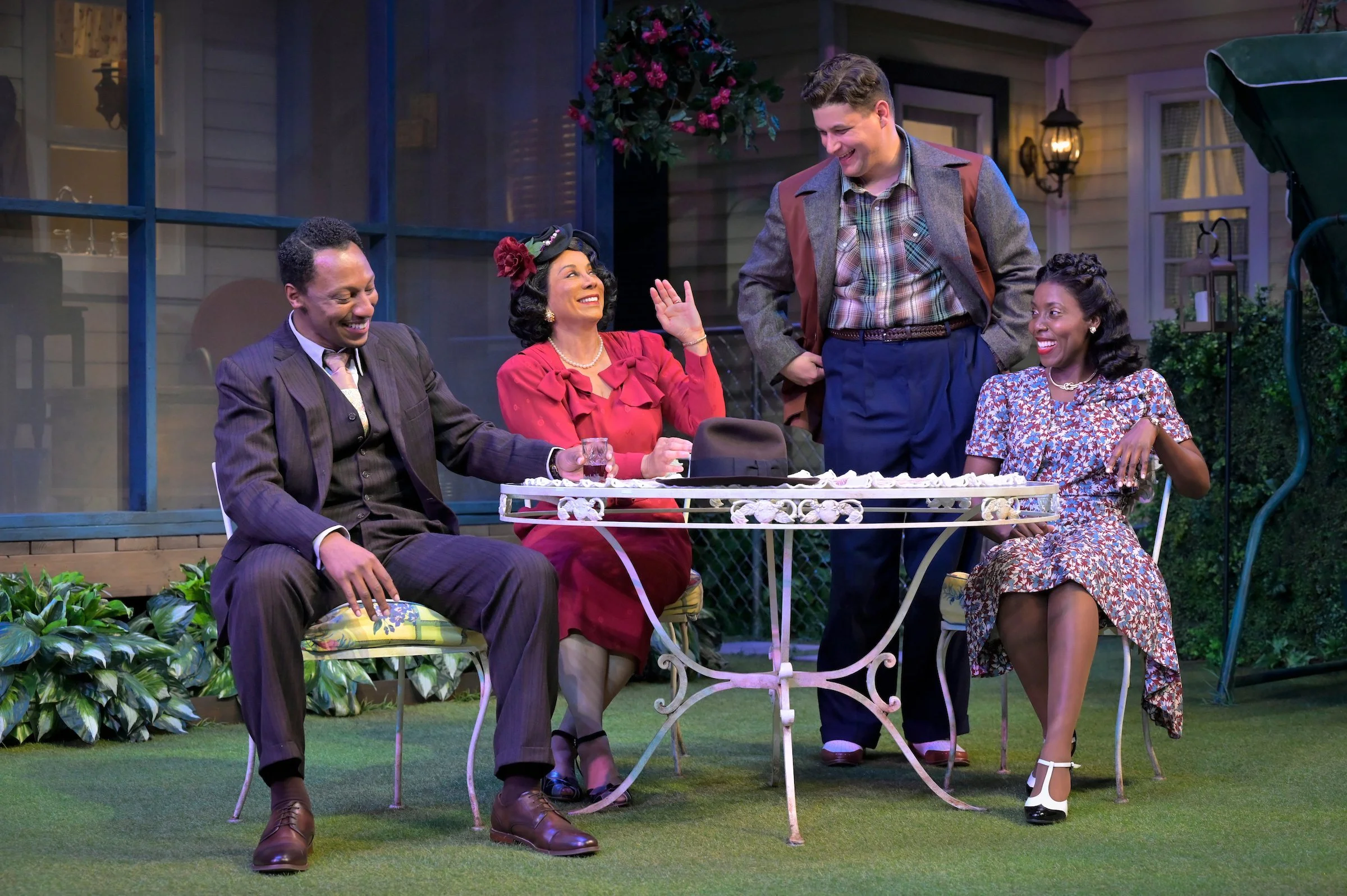
      Ray Khalili, Tristan A. Rodriguez, Ellen Ratner—photos by Kevin Berne
    Ray Khalili, Tristan A. Rodriguez, Ellen Ratner—photos by Kevin Berne

    Neil Simon Tempers Jewish Immigrants’ Grief with Youthful Laughter

    by Mary Lou Herlihy

    Generations of bitterness cast a pall over the Kurnitz family. But the unexpected arrival of an estranged son with two teenage boys renews hope for these Jewish immigrants as they chase the “American Dream.”

    Neil Simon’s “Lost in Yonkers” is set in 1942 at the start of WWII. Written 50 years later, Simon won the Pulitzer Prize in 1991, when the Gulf War was raging.

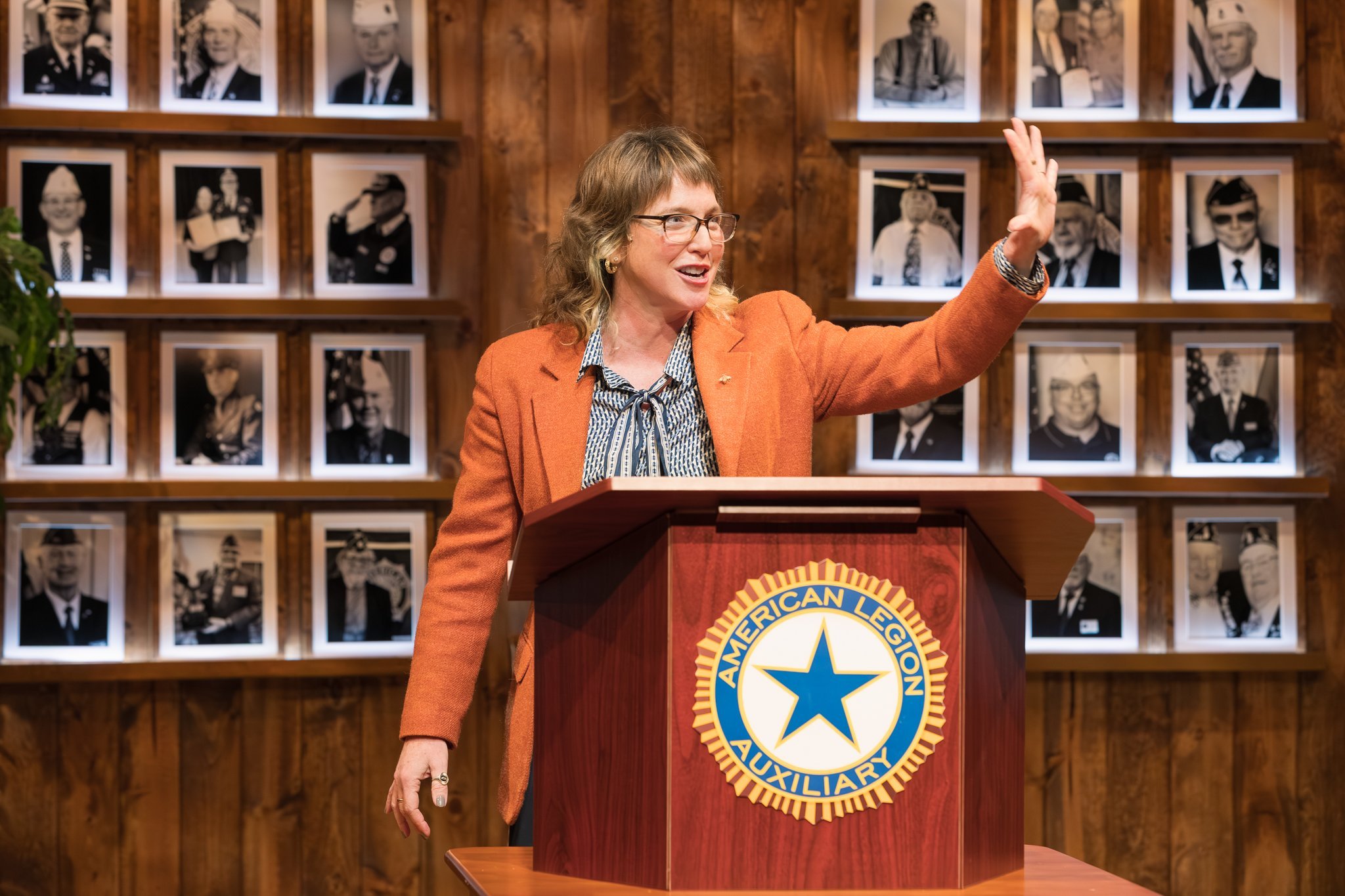
    Formidable Grandma Kurnitz (powerful Ellen Ratner) enters through the central arched hallway of Deanna Zibello’s impressive set. Grandma plods toward her ‘throne’ to size up her estranged grandsons. “Which is the smart one?” she asks in a German accent. Her notorious walking cane serves as warning and weapon.

    Grandma Kurnitz carries scars from WWI Germany that make her “American Dream” a wretched one. Her death grip on misery poisons the whole family. Grandma keeps her afflicted daughter Bella (brilliant Renee Rogoff) on the tightest leash and threatens to “put her in a home if she’s not a good girl.”  

    But child-like Bella radiates love. She smothers her nephews with hugs and cannot stop talking. “Where is your mom?” she asks. When the boys register shock, then pain, she backpedals, saying, “I mean, where is she buried?” Her awkward kindness means the world to these dislocated kids!

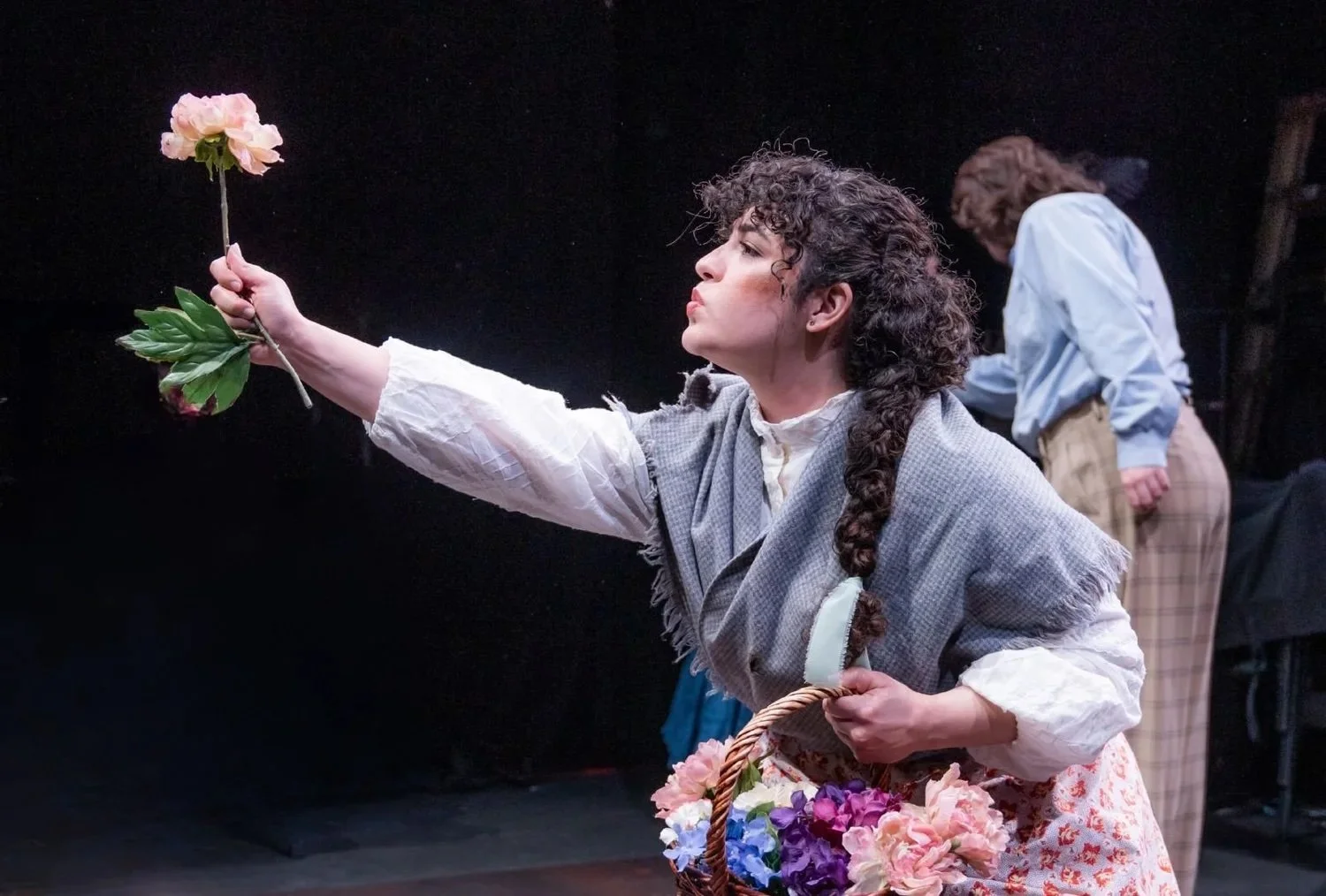
      Ray Khalili, Tristan A. Rodriguez, Renee Rogoff, Adam Magill.
    Ray Khalili, Tristan A. Rodriguez, Renee Rogoff, Adam Magill.

    Bella’s estranged brother Eddie (masterful Adam Magill) returns to his mom’s unhappy home in desperation. He begs her to take care of his boys while he works down South. He needs money FAST. He owes mountains of medical debt to ruthless loan sharks.  

    His mom refuses but sister Bella announces that the boys WILL stay, standing up to her mother in a glorious act of defiance. Rogoff imbues Bella with such depth of feeling that when she cries out to be held, we ache with pain for the broken woman-child. When Bella’s sister steps in, we feel the rush of love that their mother cruelly denies.

    Eddie’s precocious teenage sons, Arty (delightful Ray Khalili) and Jay (charming Tristan A. Rodriguez) feel trapped in Grandma’s fastidious Yonkers apartment. As the boys swelter in their suits and ties, they swap stories and practice hysterical imitations of their peculiar family. Grandma, Uncle Louis (talented Vinny Randazzo), Aunt Gert (hilarious Sarah Mitchell), and Aunt Bella are simply comedic characters to the innocent boys. 

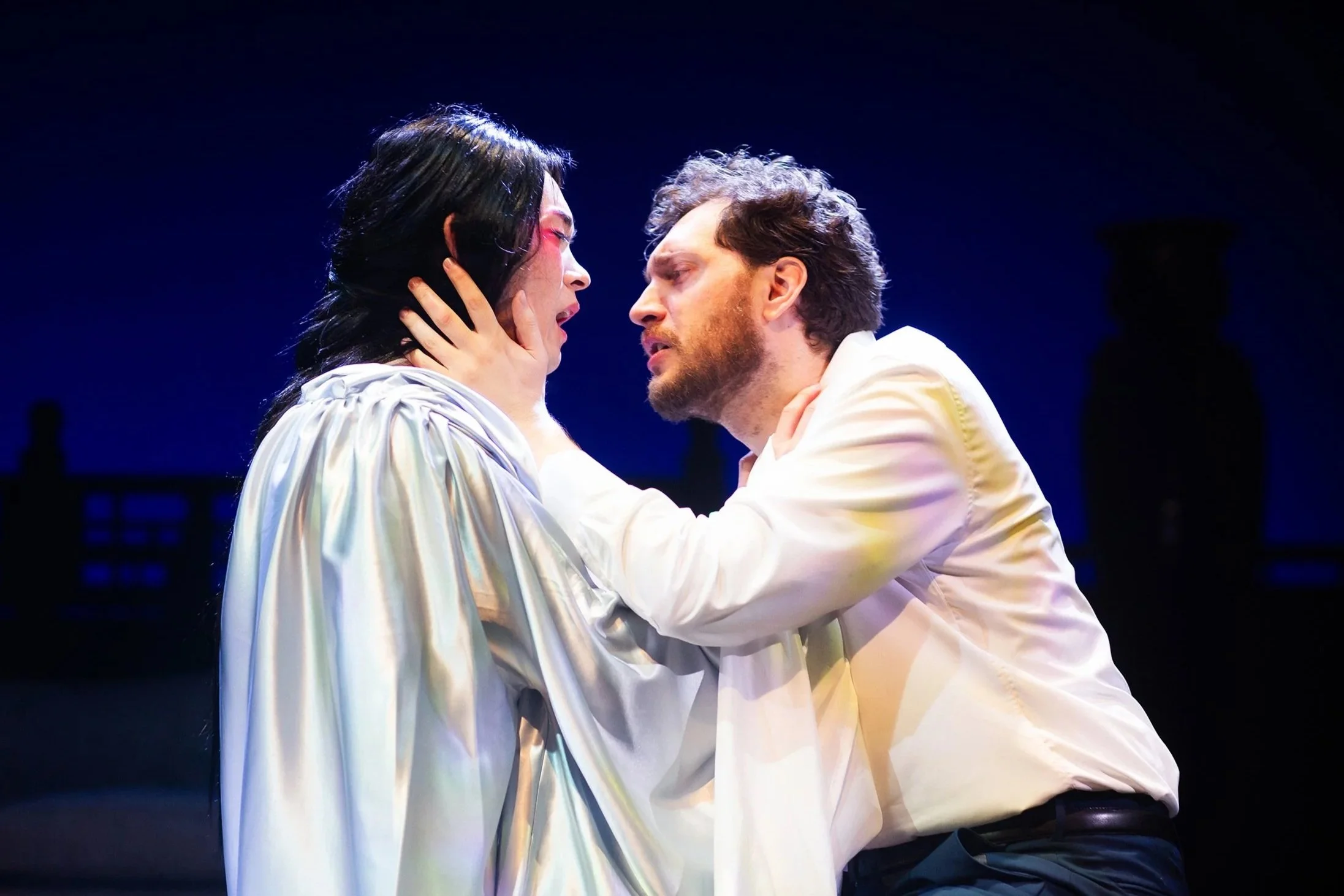
      Vinny Randazzo, Ray Khalili.
    Vinny Randazzo, Ray Khalili.

    Director Nancy Carlin highlights the family’s eccentricities. Bella wanders forgetfully. Nervous Louis cannot sit still. Tiny, fearful Gert gasps for air as she speaks. Tyrannical Grandma commands from her throne. 

    Projected on large columns with oversized handwritten letters, we see footage of Eddie, usually on a train, speaking to his sons. On grandma’s pull-out couch, the boys read his letters, hanging on his every word. And upon Eddie’s triumphant return, it seems everyone has grown.

    Nephews Arty and Jay help their Aunt Bella grow up. As she challenges the cruelty of her mom, Bella gains confidence. When the boys accept Bella’s playful goodbye gifts, a lightness emerges in the Kurnitz family, and anything seems possible.

    Through all the laughter, “Lost in Yonkers” leaves us with plenty to ponder. What seeds of grief are being planted by Trump’s War with Iran?

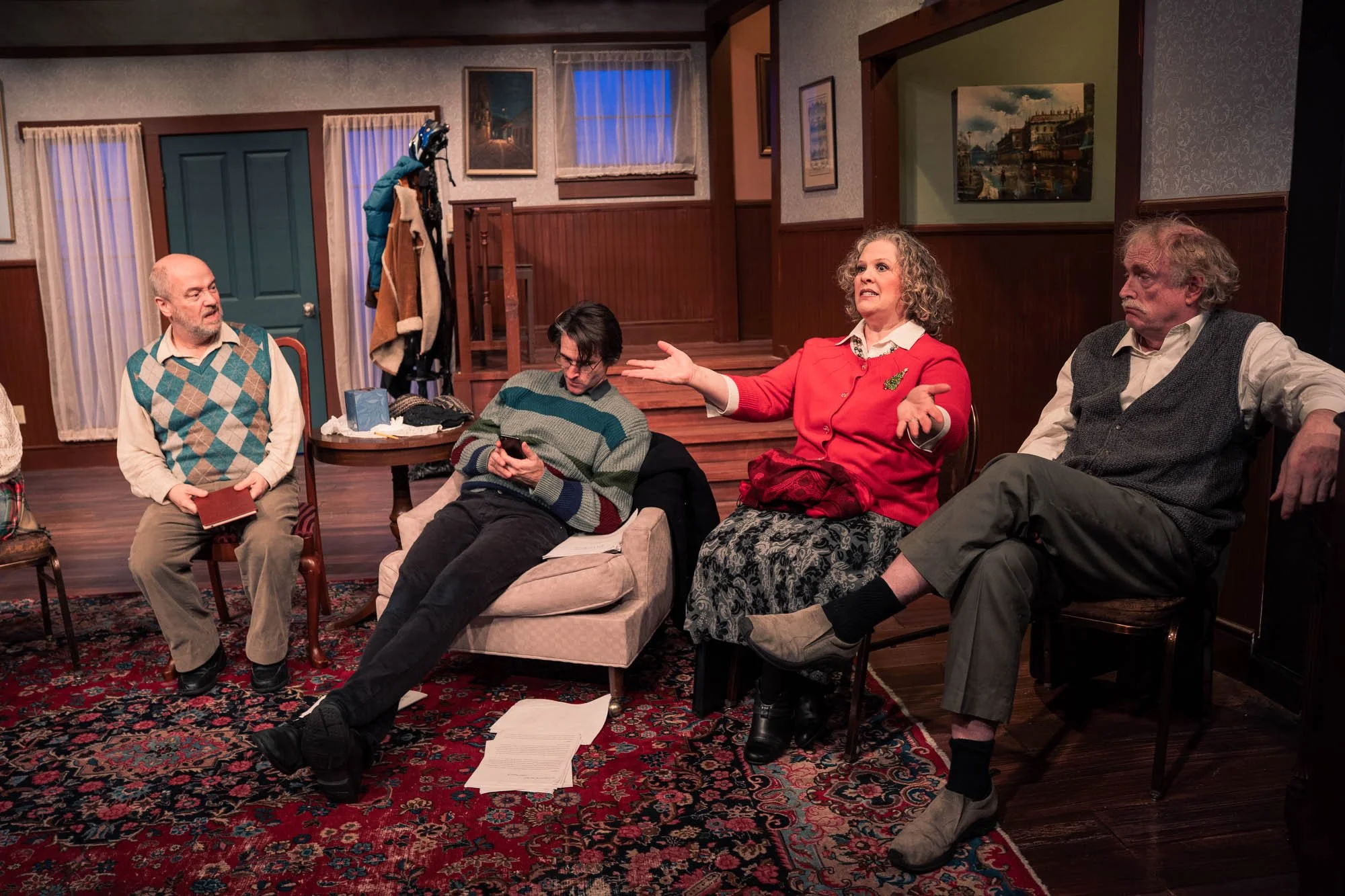
      Tristan A. Rodriguez, Renee Rogoff, Ray Khalili.
    Tristan A. Rodriguez, Renee Rogoff, Ray Khalili.

    “Lost in Yonkers” by Neil Simon, directed by Nancy Carlin, scenic design by Deanna Zibello, costumes by Becky Bodurtha, lighting by Christian Meija, and sound by Cliff Caruthers, at CenterREP, Walnut Creek, California.

    Info: centerrep.org – to April 19, 2026.

    Cast: Ray Khalili, Adam Magill, Sarah Mitchell, Vinny Randazzo, Ellen Ratner, Tristan A. Rodriguez, and Renee Rogoff.

  • “The Monsters”: An Intense Sibling Love Story—at Berkeley Rep

    “The Monsters”: An Intense Sibling Love Story—at Berkeley Rep

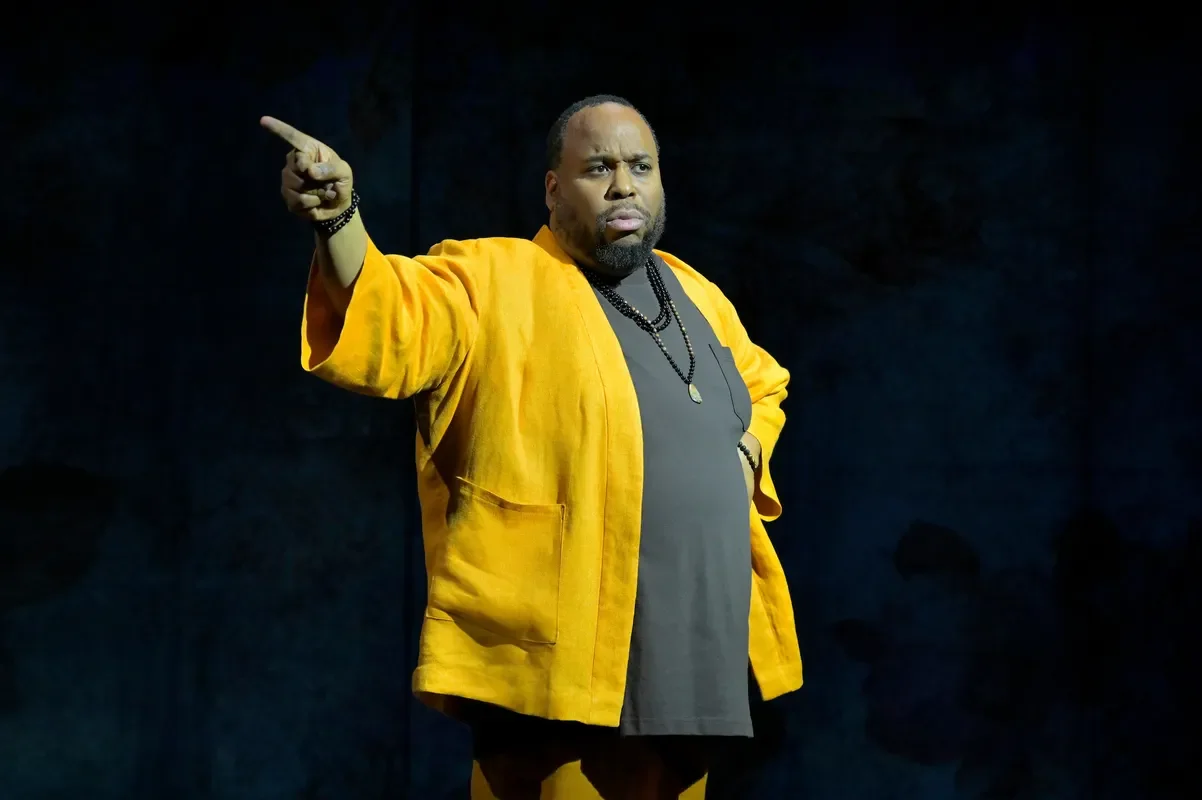
      Sullivan Jones (Big). Photos: Kevin Berne
    Sullivan Jones (Big). Photos: Kevin Berne

    Ngozi Anyanwu’s Big Brother/Little Sister Tale Moves Us

    by Kheven Lee LaGrone

    Berkeley Rep’s production of Ngozi Anyanwu’s “The Monsters” seduced me from its beginning. Anyanwu has created an intense, beautifully written sibling love story. While she sets the play in the world of competitive mixed martial arts (MMA), it is not just another sports story. Here, fighting becomes a metaphor for the struggles in a big brother/little sister reunion.

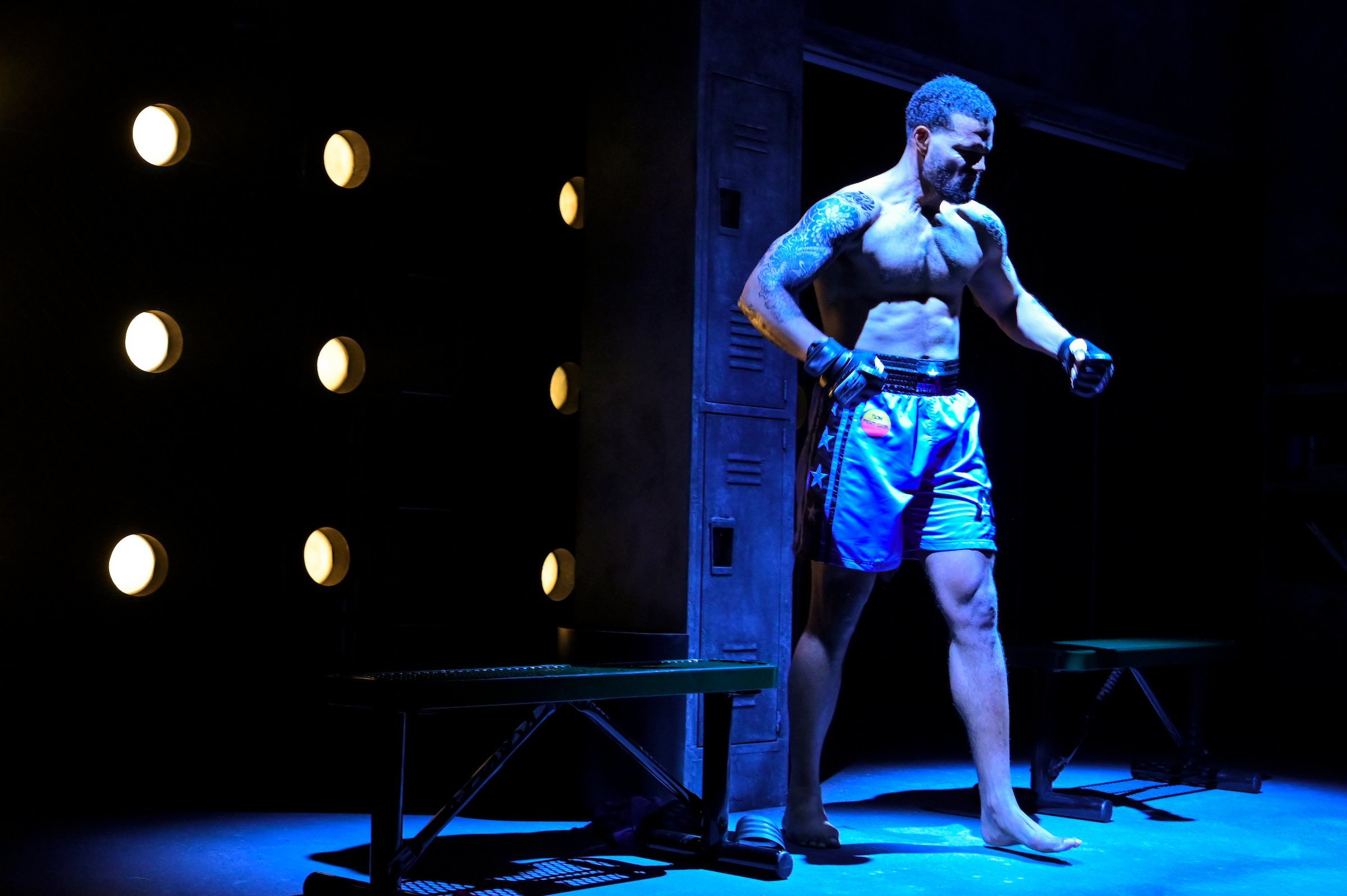
    Pleasantly handsome Sullivan Jones delivers a magnificent Big. Six-foot-four and athletically built, Jones projects physical power as he performs MMA moves. He is completely believable as an MMA champion and a confident big brother.

    The opening scene stands out, as Jones exhibits his sculpted body, an impactful announcement of his character’s strength and beauty. We want to follow his story.

    Big, an aging MMA fighter, has not seen his estranged half-sister, Lil (played by playwright Ngozi Anyanwu) in years. He does not know that she is proudly watching him from a distance. Lil wants to compete like her half-brother.

      Ngozi Anyanwu (LIL) and Sullivan Jones (BIG)
    Ngozi Anyanwu (LIL) and Sullivan Jones (BIG)

    After he wins a fight, Lil shyly approaches to congratulate Big. He does not recognize her. When she tells him who she is, he does not want to be bothered. He snaps at her that sharing a father is not enough for a sister/brother bond.

    The past few years have been tough for them. He feels dehumanized and has become bitter and jaded, but he still wants to be loved and not treated as a “monster.” Lil has not been allowed to be his little sister anymore. She misses it. She is searching for Big, the loving, protective brother of her memories; but he no longer exists. Only the face of a lovable brother remains.

    The ‘big brother-little sister’ experience ties them in a unique sibling bond. When they were young, he protected her and gave her guidance. She has never forgotten his love and sees through his tough exterior to his hidden heart.

    As Lil, Anyanwu brings comedy to her feisty, yet adorable, character. As a pesky little sister, she knows how to annoy and challenge Big. She fights to retrieve the brother she knew. I laughed and cheered for her.

      Ngozi Anyanwu (LIL) and Sullivan Jones (BIG)
    Ngozi Anyanwu (LIL) and Sullivan Jones (BIG)

    Skilled director Tamilla Woodard has crafted a strong, detailed, and emotional production. Choreographer Adesola Osakalumi and MMA consultant Sijara Eubanks have designed MMA dances that often communicate better than words. They form the muscle of “The Monsters.” Rather than hugs and proclamations of love, Big and Lil connect through graceful dance-exercises and even fighting.

    Two critiques: First, the play goes back-and-forth abruptly in time, which can be confusing. Second, the over-use of the n-word puts me off.

    But the surprising revelation at the climax makes it all worthwhile. I love “The Monsters” and I’ve already recommended it to my friends.


    “The Monsters” by Ngozi Anyanwu, directed by Tamilla Woodard, choreographed by Adesola Osakalumi, scenic design by Nina Ball, costumes by Celeste Jennings, lighting by Reza Behjat, sound by Bailey Trierweiler&Uptownworks, co-produced with La Jolla Playhouse, at Berkeley Repertory Theatre.

    Info: berkeleyrep.org – to May 3, 2026.

    Cast: Ngozi Anyanwu and Sullivan Jones.

  • “Flex” Features Black Female Athletes Yearning to Break Free—at SF Playhouse

    “Flex” Features Black Female Athletes Yearning to Break Free—at SF Playhouse

      Halili Knox (Coach Pace) & the Lady Train basketball team. Photos: Jessica Palopoli
    Halili Knox (Coach Pace) & the Lady Train basketball team. Photos: Jessica Palopoli

    Candrice Jones’ Lady Train Scores Victory!

    by Jenyth Jo

    As a former Division 1 athlete from Stanford, I wondered whether watching a play about basketball would be as much fun as going to a Valkyries game. Director Margo Hall and her team have created a many-layered show that’s more intense than live basketball.

    In “Flex,” playwright Candrice Jones takes us inside the minds of desperate young women who believe basketball is their ticket out of oppression in the 1990s American South.

    Two hoops bookend Bill English’s strikingly realistic set design. One hoop, with a chain net, hangs above the team captain’s backyard dirt court. Inside team Lady Train’s high school gym, a shiny glass backboard sports a brand-new white nylon net. Can these Black female athletes escape the chains of Plainnole, Arkansas, by getting a college bid? Can they even reach the new WNBA?

      Paige Mayes, Courtney Gabrielle Williams, Camille Collaço, and Emma Gardner 
    Paige Mayes, Courtney Gabrielle Williams, Camille Collaço, and Emma Gardner 

    Team Captain Starra Jones (impeccable Santeon Brown) has the moves and sass necessary to attract the scouts. Her mother told her: “it’s not a foul if the referee doesn’t blow the whistle.” Brown’s dribbling prowess (she did play high school ball) resembles Steph Curry’s wizardry. She’s got a real hoopgirl’s game face and sinks her clutch shots onstage.

    But Starra can’t stand the new girl from California, Sidney (dazzling Paige Mayes) who has mastered the side-eye slam. Hotshot Sidney has attracted college scouts already. Starra and Sidney trade jealous verbal jabs and fab dance moves, bad attitudes intact.

    With soft Southern accents, Brown and Mayes capture smack-down, trash-talking jock lingo. Their words sing and sting. We enjoy the heckling.

    Steamy teenage hook-up dreams and condom training on a cucumber keep us hooting during a team sleepover. These women bond before they battle.

    The players took an oath not to drink, smoke, or have sex, but April Jenkins (spicy Camille Collaço) is benched for pregnancy. Coach Pace (terrific Halili Knox) prioritizes the unborn child above the upcoming state tournament.

      Starra (Santeon Brown) plays basketball with Sidney (Paige Mayes) 
    Starra (Santeon Brown) plays basketball with Sidney (Paige Mayes) 

    After playwright Candrice Jones artfully reveals each player’s secret, she provides a crisis to repair their broken bond. Will Starra learn there’s no “I” in TEAM before it’s too late?

    Coach Pace creates a “come to Jesus” moment, asking Starra: “Do you play the game you love, or do you play to show off?” With her booming voice and commanding presence, Halili Knox makes everyone play fair.

    Cherise Howard (talented Emma Gardner) wants to preach pro-life religion; her top-notch singing brings the church to us. Donna Cunningham (clever Courtney Gabrielle Williams) provides persuasive witness, even as she weighs her college options.

    Basketball consultant Emmanuel Blackwell has the actors dribble, shoot, and run plays onstage, adding energy and tension with crisp passes and defensive triple-stances.

    “Flex” tackles baptism, abortion, back-stabbing, and revelations as the team chants and draws us into the game, too. With creative stage movement and shot blocking, this game feels real. We root hard for these young women to keep their dreams alive.

    Yes, I miss the early days of women’s sports, when a teen girl’s dream was simply a college scholarship. “Flex” reveals how much harder Southern Black women have to work for their opportunities.


    “Flex” by Candrice Jones, directed by Margo Hall, scenic design by Bill English, lighting by Ray Oppenheimer, costumes by Jasmine Milan Williams, and sound by Ray Archie, at San Francisco Playhouse.

    Info: sfplayhouse.org– to May 2, 2026.

    Cast: Santeon Brown, Camille Collaço, Emma Gardner, Halili Knox, Paige Mayes, and Courtney Gabrielle Williams.

  • “The Goat or, Who Is Sylvia?” Tears the Veil & Confronts Us—at Shotgun

    “The Goat or, Who Is Sylvia?” Tears the Veil & Confronts Us—at Shotgun

      Erin Mei-Ling Stuart & William Giammona. Photos: Ben Krantz Studio
    Erin Mei-Ling Stuart & William Giammona. Photos: Ben Krantz Studio

    ‍Edward Albee’s Searing Tragedy Evokes Laughter, Tears, Revelation‍ ‍

    by Bevon Benet Brye ‍

    In “The Goat or, Who Is Sylvia?” Edward Albee uses bestiality as a scorched-earth metaphor for the limitations of modern empathy. The playwright challenges us to extend our feelings beyond the liberal pieties about race, gay, and “others.” Here, everything is included.

    Sylvia, The Goat, “them,” is less about the goat and more about the terrifying unknown in ourselves. Four great actors tear the mask from the visceral, messy reality we avoid in the streets of San Francisco.

    Shotgun Players’ production will make your skin crawl in the best way. Brilliant director Kevin Clarke takes provocation to new heights, shoving our faces into the gritty life that his spoiled, privileged characters fear and detest.

    Martin (urbane William Giammona), a world-class architect, has fallen deeply in love with a goat he encounters in the countryside—a goat with “a bag of nipples dragging in the dung.” Giammona makes us feel like we are trespassing on a man’s mental breakdown. It’s invasive, gross, and I could not look away!  

      William Giammona & Kevin Singer
    William Giammona & Kevin Singer

    Elegant Martin is “hopelessly” in love and trapped by his success. He cannot bear the splendid isolation of his wealth and fame. Nature calls out to him, luring him to an earthier world. His brain has become a sieve, as he comically loses track, while his life catches fire.

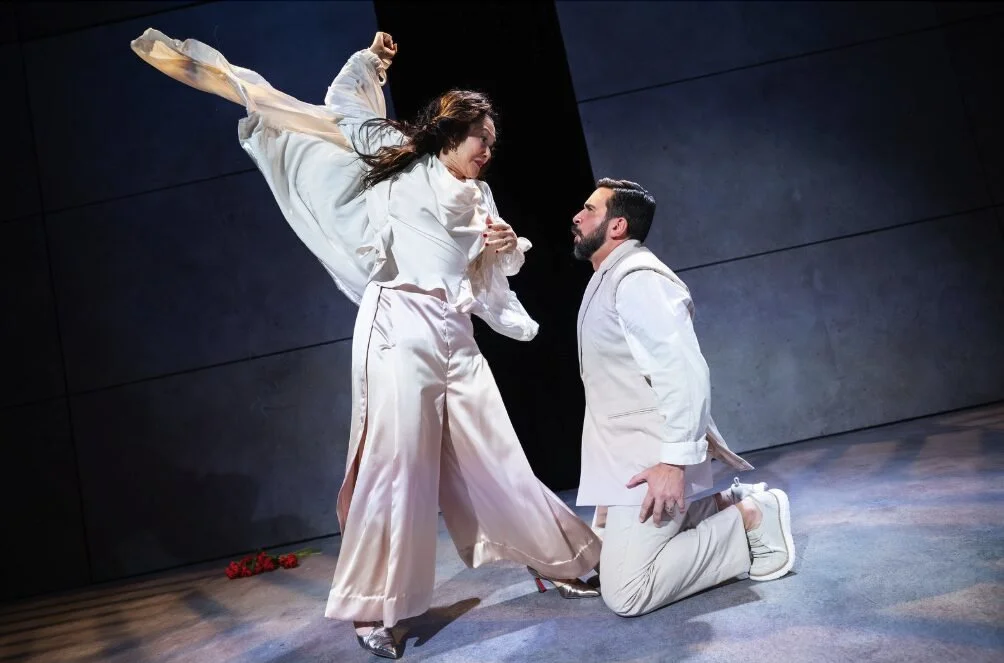
    Liliana Duque Piñeiro’s elegant single-wall set and Sharon Peng’s loose white clothing suggest Greek tragedy. Their elite offense is arrogance in over-insulated lives.

    As Stevie, his wife, the extraordinary Erin Mei-Ling Stuart, engages Martin in off-the-cuff, Noel Coward banter. She plays her role as sophisticated lady-wife with fervor. She goes from arranging flowers to screaming, “GET YOUR GOAT-FUCKING HAND OFF ME!!”

    Stuart’s unfolding intensity feels like a horror film. In this symbolic show, there are no props, just sound to indicate her destructive acts.  As an elegant, spoiled lady, she cannot comprehend Martin’s utter degradation. Their privileged world shatters because it’s too perfect.

      Erin Mei-Ling Stuart & Joel Ochoa
    Erin Mei-Ling Stuart & Joel Ochoa

    Joel Ochoa’s vivid performance as the 17-year-old, clever gay son Billy, provides the jolt for the family’s collapse. He’s “gay as the nineties,” but the gut-punch comes when Billy confronts his father. Their contact is physical and threatening, tearing another veil from their conformist life. Like Oedipus, they have been living a lie.

    They are out of touch with their emotions. Standing in contrast is Kevin Singer’s diabolical Ross, the Judas friend who pens the snitch letter that destroys the family. Singer plays him as an ethical torturer, a puritanical prick we soon despise. Ross shows that we have lost the ability to feel anything about those who are “unlike” us.

    When Martin stands “at the top of the hill,” staring into the “pure and trusting” eyes of a beast, his city life becomes a “pit so deep” he cannot climb out. He sees his own superficiality and falls into a comic despair.

    Shotgun Players dares to take a powerful new tack on Albee’s “The Goat,” and open our eyes to fear. After the doubly shocking climax, we will never be the same. A masterpiece.


    “The Goat or, Who Is Sylvia?” by Edward Albee, directed by Kevin Clarke, lighting by Sophia Craven, costumes by Sharon Peng, set & props design by Liliana Duque Piñeiro, and sound by Matt Stines, at Shotgun Players, Berkeley, California.

    Info: shotgunplayers.org – to April 26, 2026.

    Cast: William Giammona, Joel Ochoa, Erin Mei-Ling Stuart, and Kevin Singer.

  • “Public Charge” Proves Diplomacy Is Difficult & Worth Pursuing—at The Public

    “Public Charge” Proves Diplomacy Is Difficult & Worth Pursuing—at The Public

      Zabryna Guevara. Photos by Joan Marcus.
    Zabryna Guevara. Photos by Joan Marcus.

    Julissa Reynoso & Michael J. Chepiga Spotlight Government as Force for Good 

    by Andrea Libresco

    “Public Charge” feels like the foreign policy companion to Michael Lewis’ Who is Government?: The Untold Story of Public Service. Lewis’ book celebrates committed, creative professionals in our government. They are the best of the best—a far cry from the current violence-prone “leader” and his chainsaw-wielding sidekick.

    Our current regime has scorned diplomacy, starting with DOGE-ing USAID, a model of soft power. And now they are waging, unilaterally, a barely thought-out war against Iran. But the true story of Julissa Reynoso shows how government can work for us.

    Reynoso and Michael J. Chepiga’s “Public Charge” performs the neat trick of presenting the diplomatic world of the Obama years, while contrasting that hopeful time with today’s darker world. The contrast takes place in our minds, raising a double consciousness like the double meaning of the play’s title.

    “Public Charge” opens in 1981, at the US Embassy in the Dominican Republic, with 6-year-old, Spanish-speaking Julissa Reynoso being denied admission to the US. The consulate sees her as a probable drain on U.S. coffers.

      Zabryna Guevara, Al Rodrigo, John J. Concado
    Zabryna Guevara, Al Rodrigo, John J. Concado

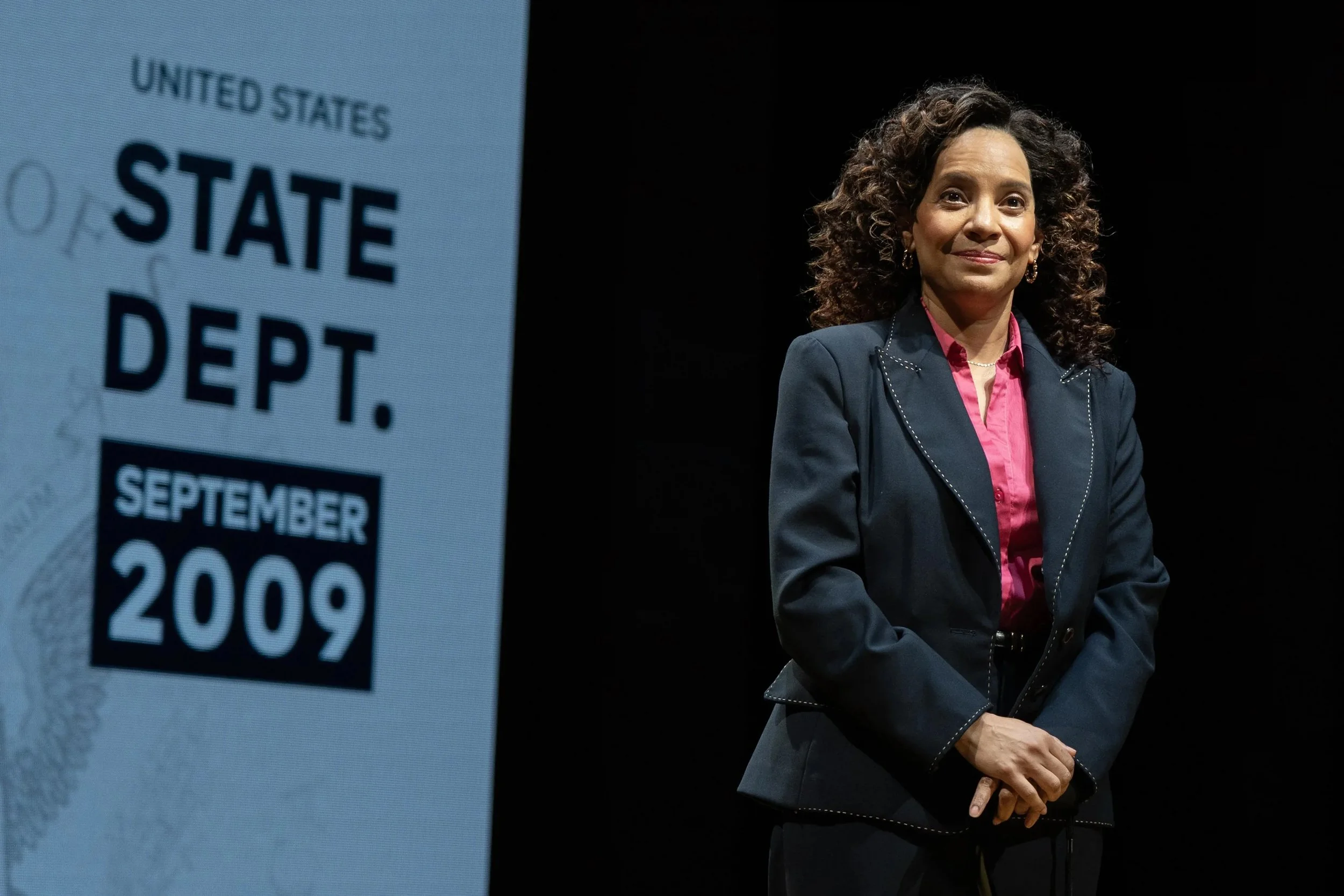
    Fast forward to 2009, when Julissa is hired at President Obama’s State Department, encouraged to apply by Hillary Clinton. Julissa’s perfect English and Harvard education make her a brilliant hire. She becomes a diplomat who has a public charge to represent the U.S. in Latin America.

    What if she had been permanently denied citizenship? We would never have had the benefit of a woman who left a high-paying law firm to serve her adopted country in public service.

    “Public Charge” is not just an autobiographical tour of one woman’s work. Its narrative tension revolves around the quest to free American hostage Alan Gross. Can President Obama change half a century of hostile foreign policy toward Cuba?  

      Maggie Bofill and Al Rodrigo
    Maggie Bofill and Al Rodrigo

    The play charges forward, with diplomats constantly circulating. The audience sits on opposite sides, a staging that suits the ongoing encounters. Diplomats present subtle arguments to multiple stakeholders. Where is that art now?

    As Julissa, sympathetic Zabryna Guevara engages with complex characters: the Cuban representative (wonderfully calculating Maggie Bofill), Julissa’s boss (strong Marinda Anderson), and the hostage’s wife (gripping Deirdre Madigan). Julissa has nightmares over the American hostage.

    Admirably, Reynoso casts a colleague in the most nuanced role. Ricardo Zuniga (Dan Domingues) plays a powerful diplomat who served several presidents. Zuniga remains when Reynoso leaves; but he has been touched by her idealism.

      Armadno Riesco, Zabryna Guevara, and Al Rodrigo
    Armadno Riesco, Zabryna Guevara, and Al Rodrigo

    Again, our double consciousness: these civil servants serve country, not leader. How can they operate today with a president who demands loyalty to himself over country?

    Diplomacy is necessary. Diplomacy has multiple actors. Diplomacy requires patience and persistence.

    The end of the play ought to be a triumph; Cuba has released the hostage at long last. And yet, we feel anything but release. Alan Gross spent five long years in a Cuban prison, separated from his wife.

    Julissa believes “things are falling into place,” as she anticipates that Secretary of State Hillary Clinton will be the first woman president: “We are going to be the most progressive, inclusive country in the world. The best is yet to come.”

    Sadly, we know better. For us, the ending is brutal.


    “Public Charge” by Julissa Reynoso & Michael J. Chepiga, directed by Doug Hughes, scenic design by Arnulfo Maldonado, costumes by Haydee Zelideth, lighting by Ben Stanton, and sound by David Van Tieghem, at The Public Theater, New York.

    Info: publictheater.org – to April 12, 2026.

    Cast: Marinda Anderson, Nate Betancourt, Maggie Bofill, John J. Concado, Dan Domingues, Zabryna Guevara, Yesenia Iglesias, Paco Lozano, Deirdre Madigan, Nairoby Otero, Armanda Reisco, and Al Rodrigo.


  • “Macbeth” Updated to 70s New York, A Vital New Vision—at Magic

    “Macbeth” Updated to 70s New York, A Vital New Vision—at Magic

      Catherine Castellanos & Sarah Nina Hayon. Photos by Jay Yamada
    Catherine Castellanos & Sarah Nina Hayon. Photos by Jay Yamada

    Migdalia Cruz Adapts Shakespeare for Our Time

    by Jo Tomalin

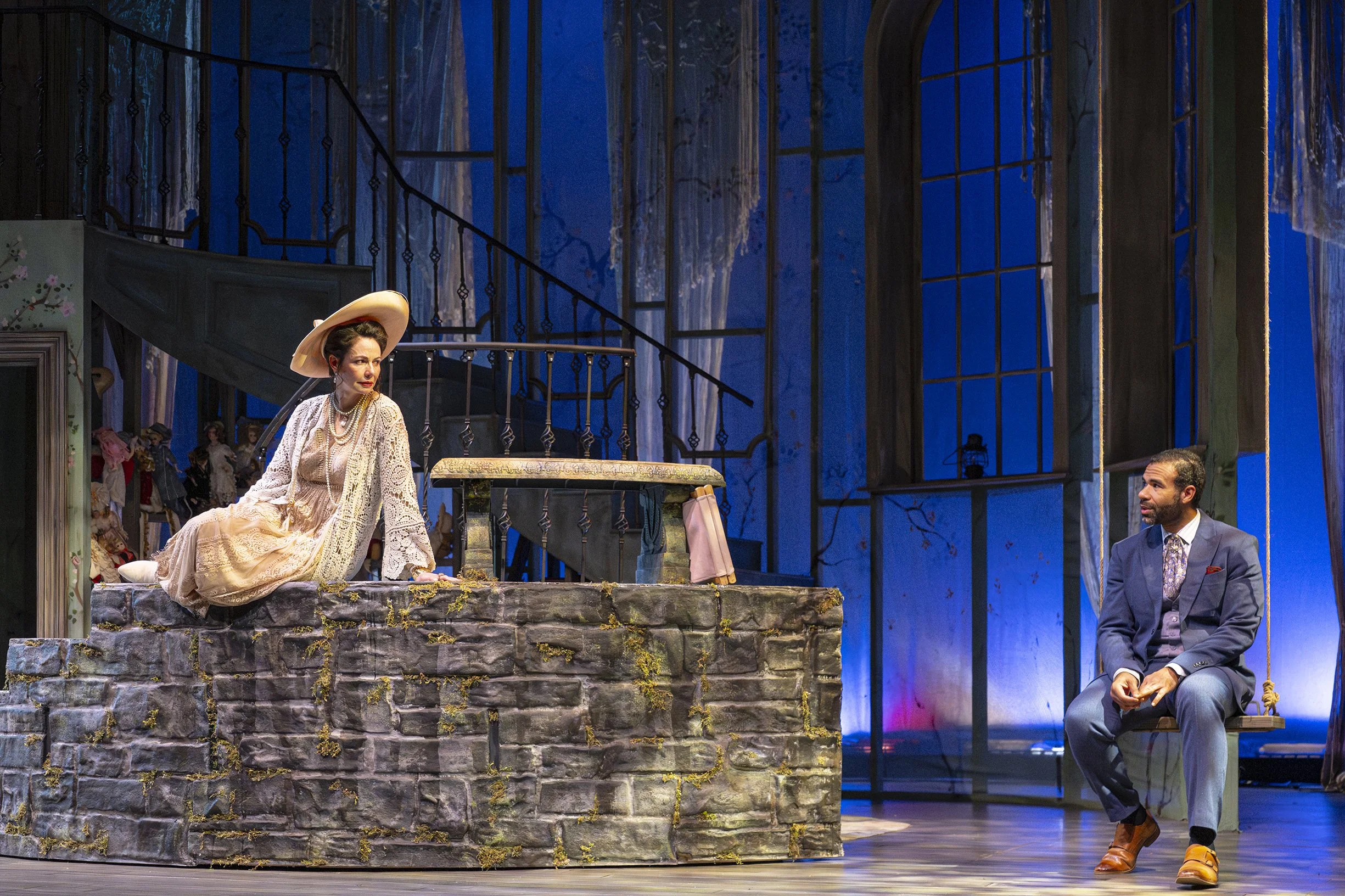
    The Magic Theatre’s new vibrant production of “Macbeth,” in a modern version by Migdalia Cruz, directed by Liam Vincent, is led by an earthy and feisty Catherine Castellanos as the ambitious general Macbeth. Castellanos is a force of nature commanding every scene!

    Macbeth chats to us, and Castellanos displays mischievous unrest with a delicious, casual delivery, as if hanging out with us. Castellanos’ engaging manner breaks apart not only Macbeth’s character, but also Shakespeare’s language in this new adaptation. Playwright Cruz has translated Shakespeare’s words into a streamlined, user-friendly script for this 95-minute performance.

    In these days of assault and ambition, Macbeth mirrors and highlights cutthroat political competition, literally. This queer re-telling shows the strength and gutsiness of the Macbeths in their lust for power at any cost. Yet, because Castellanos initially welcomes us warmly, we are hooked with empathy from the start.

      Danny Scheie, Catherine Castellanos, Nora El Samahy, Brian Rivera, Sarah Nina Hayon
    Danny Scheie, Catherine Castellanos, Nora El Samahy, Brian Rivera, Sarah Nina Hayon

    Macbeth lives in New York. Sure! And in the gritty 70s, with dynamic societal changes like gay relationships, gangs, and immigration emphasized boldly in the casting. The 70s costumes include tracksuits and heavy gold chains.

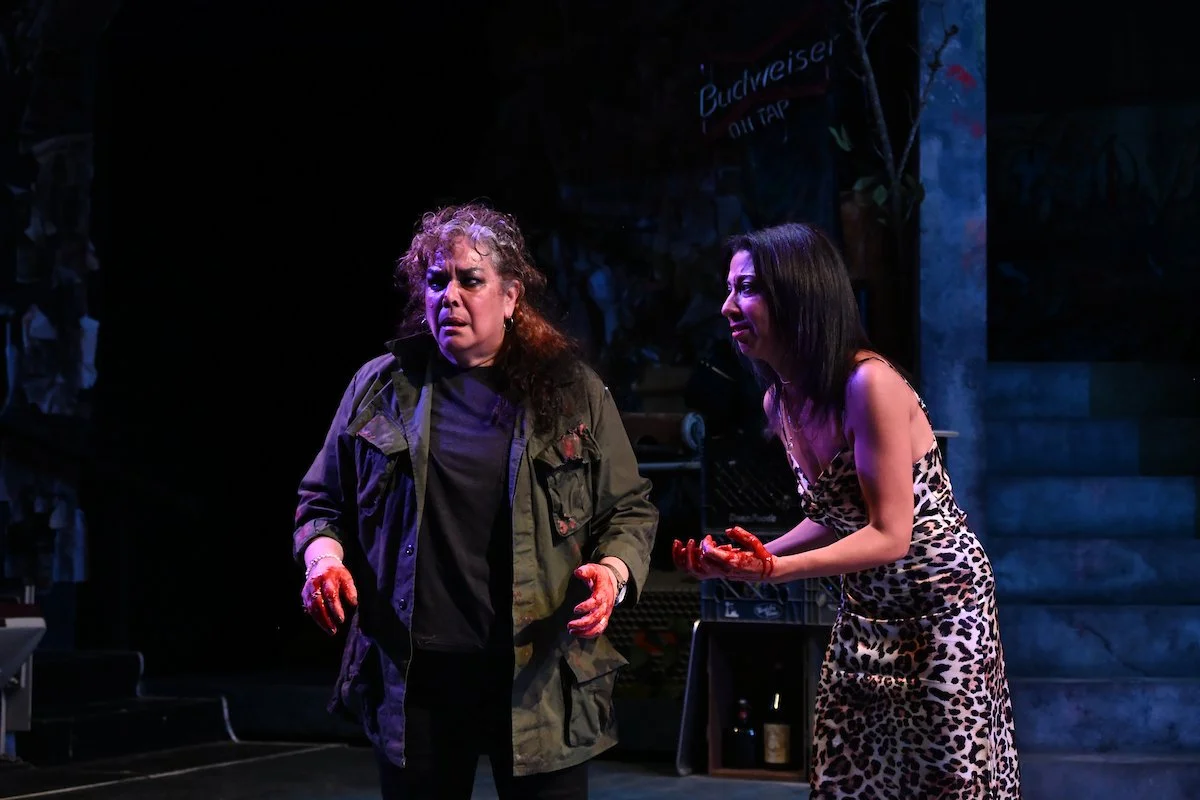
    Scenic Designer Carlos-Antonio Aceves creates a dark, theatrical world that evokes the lurid darkness of NYC at night. The set design features a creative multi-level set with a bar, alley, and steep stairs, all in black, surrounded by grunge and graffiti. This is a perfect setting for the underhanded scheming we see from Macbeth and others living in the neighborhood.

    Both Macbeth and Lady Macbeth are played by women, a focal feature of this production, which populates the play with people who truly reflect our communities. Sarah Nina Hayon plays a glamorous, super ambitious Lady Macbeth, wearing a leopard skin coat and a silky red negligee. As she struts across the stage, Lady M is the cool power player leading Macbeth into a complex web of greed.

      Kina Kantor
    Kina Kantor

    When cajoling Macbeth, Hayon reminds us of a viper hissing. Castellanos and Hayon make a forceful pair in their complicated relationship and interactions. Their bursts of strength and vulnerability show us the balance of emotions switching back and forth.

    Nora El Samahy plays Banquo, Macbeth’s good friend, imbuing the character with heartfelt honesty from their first meeting. When Macbeth suggests Banquo’s days are numbered, a groan of sympathy rises from the audience.

    Bright fluorescent lights flash and change color for every scene, evoking excitement and frenzy! A complete wash of green lights illuminates the witches’ scene, highlighting three gnarly witches in green wigs and quirky, unmatched clothing in shades of green.

    The strong ensemble cast, led by Castellanos in an outstanding and layered performance, vividly shows how quickly conflict and violence escalate when ambition is the driving force—a tragedy indeed. Migdalia Cruz and Magic Theatre have produced a new “Macbeth” that is not only powerful but also passionately enlightening and entertaining.


    “Macbeth” by William Shakespeare, new modern version by Migdalia Cruz, directed by Liam Vincent, scenic design by Carlos-Antonio Aceves, costumes by Alina Bokovikova, lighting by Justin Partier, sound by Matt Stines, and props by Imani Wilson, by Magic Theatre, San Francisco.

    Info: magictheatre.org – to April 5, 2026

    Cast: Catherine Castellanos, Juan Amador, Nora el Samahy, Sarah Nina Hayon, Danny Scheie, Kina Kantor, and Brian M. Rivera.

  • “Pass the Nails & Shame the Devil” Lifts Up Black Women Changemakers—at The Marsh 

    “Pass the Nails & Shame the Devil” Lifts Up Black Women Changemakers—at The Marsh 

      Pearl Louise—Photos by David Allen
    Pearl Louise—Photos by David Allen

    Pearl Louise Gets Pulled into Parents’ Duplex Dream in 1980s East Oakland

    by Mary Lou Herlihy

    “Pass the Nails and Shame the Devil,” is a love letter to Pearl Louise’s powerful mom. Small in stature and monumentally ambitious, her mom fights against poverty, drugs, and racism with HOPE and HARD WORK.

    As a kid, Pearl constantly heard about hope and hard work. Her parents looked to MLK Jr. for inspiration while chasing their dreams. Without a chance to chase her own, Louise gets pulled into their dream of building a duplex in East Oakland. Unfortunate timing—the height of the 80s crack cocaine epidemic!

    Louise relates her remarkable story with charm and generosity. Still early in her late-blooming acting career, she pulls us into uneasy pauses with “Hey guys” and “Excuse me.” When she draws a blank on a musician’s name, she solicits our help. Her spontaneous, endearing pivot lands beautifully. 

    While playing the slouching, fast-talking, bullshitter DeMarcus, Louise is hilarious. DeMarcus convinces her parents to hire him, even though he is blind to their charity. We wait in dread for the pay-off. 

    Playing her younger self, her parents, and quirky neighbors, Louise moves easily between characters, conjuring “deep” East Oakland in the 1980s. With Blockbuster video stores and crack cocaine on every corner, Louise recounts a neighborhood awash with drugs and desperation. In the “Reagan years,” as Louise puts it, America was going “from sugar to shit.” 

    As a teenager, looking out over the empty lot where her parents envision a beautiful new duplex, she sees only piles of garbage, old tires, rusted cans, and broken bottles. The stench of urine is sickening. Where’s her dream? 

      Pearl Louise
    Pearl Louise

    With few choices, teenage Pearl finds a silver lining. She basks in the adoring glow of her brilliant mother. Self-educated and proud, her mom teaches herself how to survey their property using equipment that “only white men in yellow vests” know how to use. Now, Louise understands why her mom loved libraries. 

    When curious neighbors refer to other black folk as “these people,” her mom corrects them:  “Our people.” Her mom reminds Pearl about Louisiana, and her own parents’ hope for greater opportunity. Dirt poor, they scrounged for pennies and dimes to send to the newly formed NAACP. They were proud Black folk, contributing to a meaningful cause. 

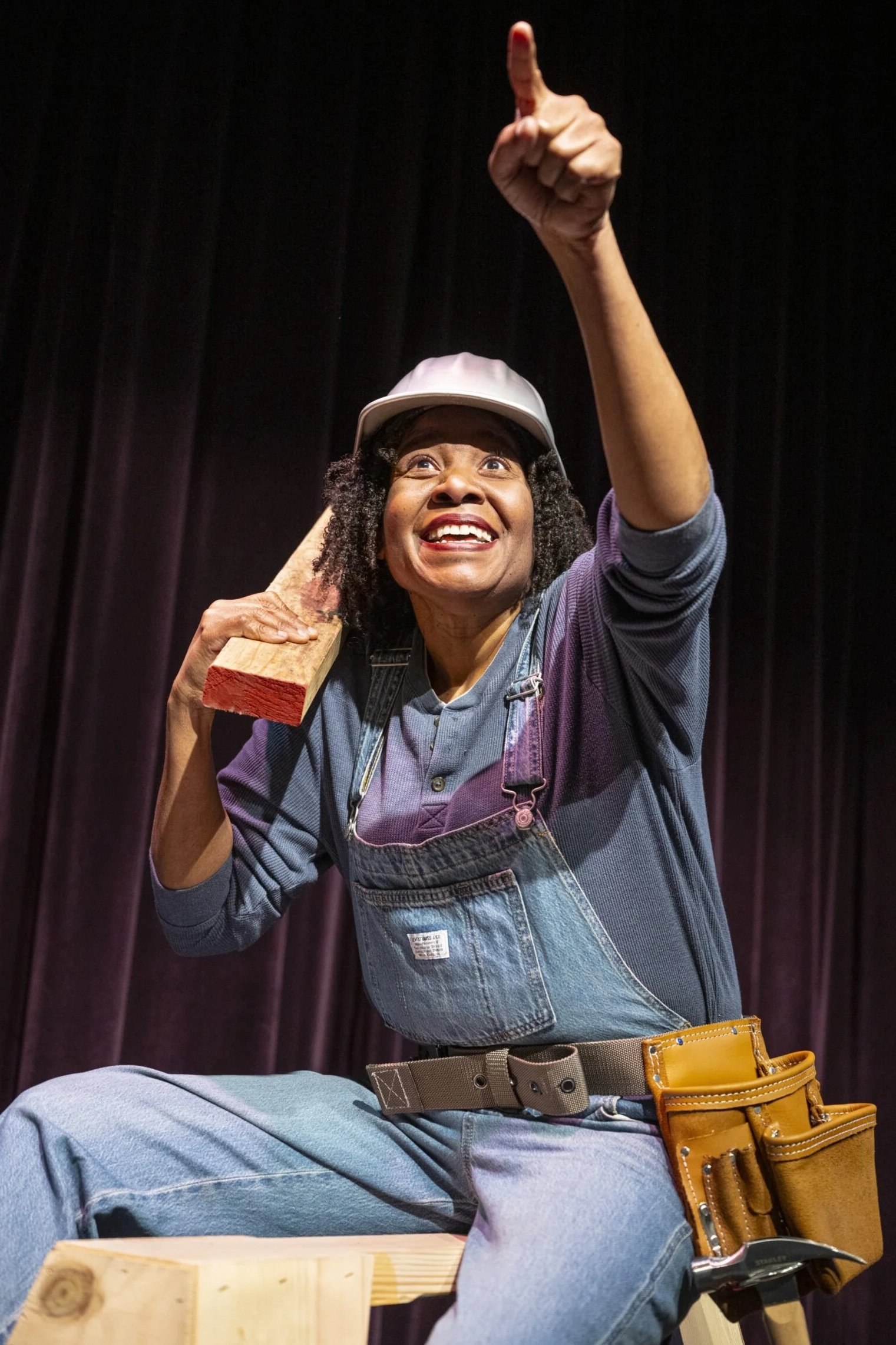
    Onstage, a small ladder, a couple of boxes, and her dungaree overalls let us know that Pearl Louise is here to work. She does a terrific pantomime of hammering, pulling handfuls of nails out of huge boxes. She hoists walls, demonstrating the physical demands of the work, keeping her story moving. But one fight scene drags, and a dubious “hero” sends mixed messages.

    “Time passes,” Louise says as we witness immense sacrifices to build the dream. Eventually, weakened by illness and exhaustion, Pearl’s mom asks, “What’s Happened to Our people?” Only then do we see her heartbreaking moment of despair.

    But a surprise ending throws a bright new light on everything that came before.

    We celebrate mother and daughter as Pearl Louise chases her own dreams. Don’t miss this beautiful limited run of “Pass the Nails.”

      Pearl Louise
    Pearl Louise

    “Pass the Nails and Shame the Devil” –written and performed by Pearl Louise, directed by David Ford, assistant directed by Quinn Gilchrist, tech by Shaila Sarathy, at The Marsh, Berkeley. 

    Info: themarsh.org – to April 18, 2026.

    Cast: Pearl Louise (playing many roles)

  • “Assassins” Reveals What Triggers Alienated Americans—at OTP

    “Assassins” Reveals What Triggers Alienated Americans—at OTP

      Adam KuveNiemann. Photos by Ben Krantz Studio
    Adam KuveNiemann. Photos by Ben Krantz Studio

    Adam KuveNiemann Astounds in Reimagined Sondheim Musical

    by Jenyth Jo

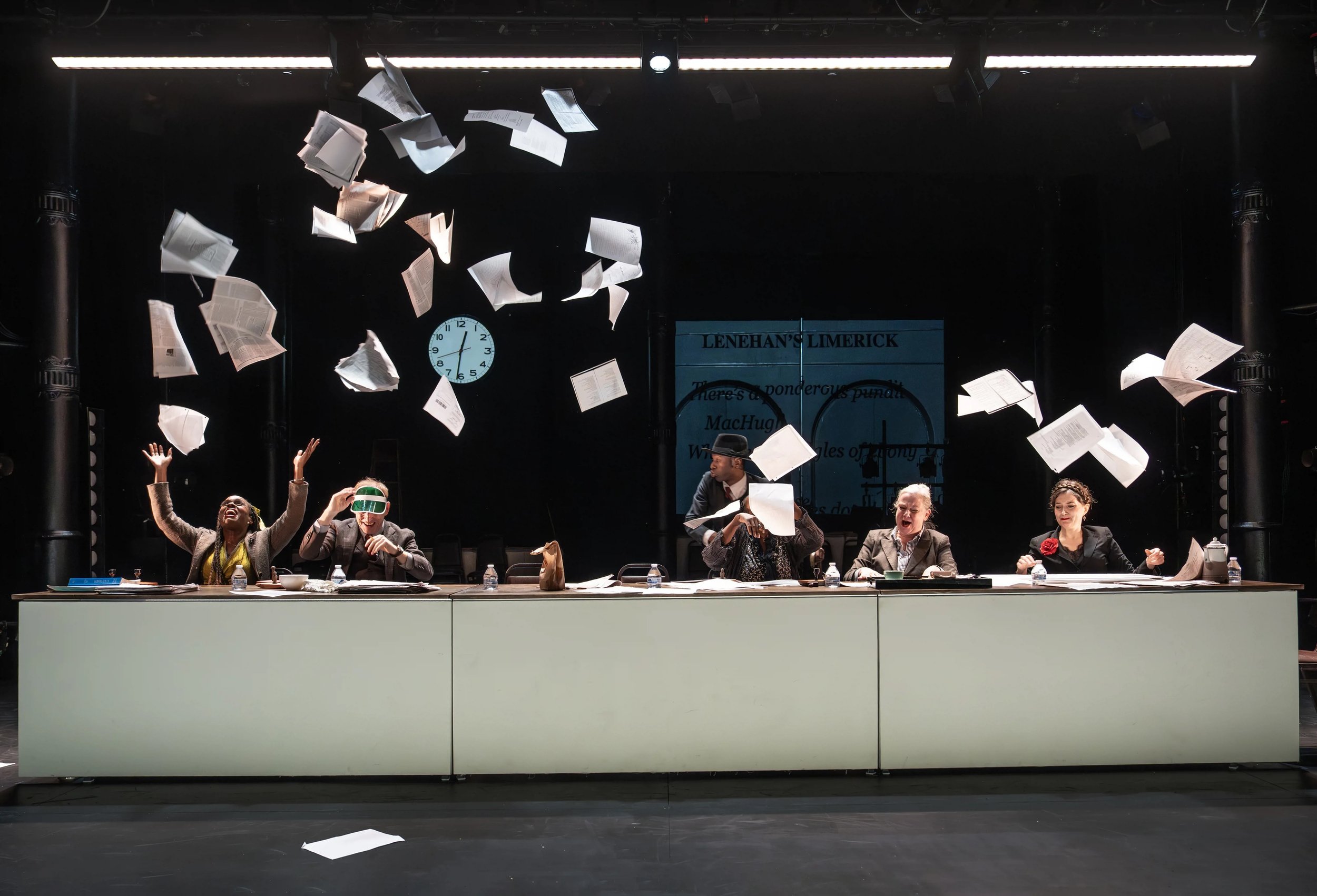
    Oakland Theater Project has delivered a great run-up to the next No Kings March in “Assassins” preshow montage. Projected on a garage wall, APTAP (TikTok’s allpower2allpeople influencer) says, “If the ruling class can ignore you, you’re not a movement.”

    In these days of mass shootings, assassination attempts, and military takeovers, all the presidential assassins in Stephen Sondheim’s musical try to convince us that “guns do right wrongs.”

    Weston Scott directs dynamic Adam KuveNiemann in a fresh, solo approach to this controversial musical. Starting with John Wilkes Booth, “Assassins” introduces the angry, disenfranchised Americans who killed Presidents Lincoln, Garfield, and McKinley.

    Thankfully, a character list tells us ‘who killed whom’ in this wildly imaginative one-man montage of U.S. history’s anti-heroes. Kudos to set designer Sam Fehr for his garage dĂ©cor. The black-walled corner suggests a murderer’s man-cave, with red yarn linking mug shots, an open laptop, and chalk graffiti of a James Bond-like gunman. How many alienated young Americans are still plotting today?

    Grunge-styled Adam KuveNiemann paces the floor, glued to his cell phone. He becomes a variety of outcasts, revealing eerie similarities between assassins and near-assassins of our presidents. These citizens feel betrayed by their leaders and their lovers. With nothing left to lose, maybe notoriety could end their loneliness?

    Through KuveNiemann’s stunning character portrayals, we begin to understand these tortured loners. When he shines a light on a mugshot of J.D. Vance, the targeted eyes are X’ed out like an evil circus clown’s. We feel the assassin’s growing desperation as he mutters about betrayal of the American Dream.

    John Wilkes Booth becomes Johnny, mourning the 600,000 blue and gray soldiers lost in the Civil War. He wants to “kill the man who killed my country.” He blames Lincoln for their deaths.

    Booth’s madness permeates subsequent assassins in humorous and macabre scenes. When KuveNiemann becomes both Sara Jane Moore and Squeaky Fromme, their hilarious discussion reveals how even young girls can become malleable instruments of destruction. Rejected and exploited by their elders, they become vulnerable and unpredictable. Love Charlie Manson? Sure.

    Through KuveNiemann’s brilliant embodiment of 14 characters, we understand how class injustices have created massive alienation from the American Dream. Among their real-life outrages, we hear how stealing immigrants’ labor creates deep despair. We laugh at inappropriate times, feel guilty, then join him in sympathy for the pitiable characters he portrays.

    In a mind-boggling display of verbal dexterity, KuveNiemann becomes the ringmaster, rallying all the “assassins” at once to pressure Lee Harvey Oswald into action. “Shoot JFK,” they say, and “you’ll be remembered like Brutus. Just a move of your little finger 
 will end a life of quiet desperation.”

    Multiple voices invade the mind of the assassin: Is this noise, or rationality? No wonder his “Take a Look, Lee” song is so controversial.

    But what happens after the songs end is an unforgettable addition to this compelling play.

    Adam KuveNiemann delivers a multi-layered performance, making us wonder when history will repeat itself. There’s no shortage of discontent today. How do we stop the next misguided bullet from a tortured soul?


    “Assassins” –music & lyrics by Steven Sondheim, book by John Weidman, based on an idea by Charles Gilbert, Jr., directed by Weston Scott, set by Sam Fehr, sound by Lane Sanders, lighting by Ashley Munday, projections by Sarah Phykitt, and music directed by Diana Lee, at Oakland Theater Project.

    Info: oaklandtheaterproject.org – to April 5, 2026.

    Cast: Adam KuveNiemann (as ALL the Assassins & more)

    “Assassins” is a SFBATCC “Go See!“ selection.

  • “||:Girls:||:Chance:||:Music:||” Celebrates Young Women Coming Up—at ACT

    “||:Girls:||:Chance:||:Music:||” Celebrates Young Women Coming Up—at ACT

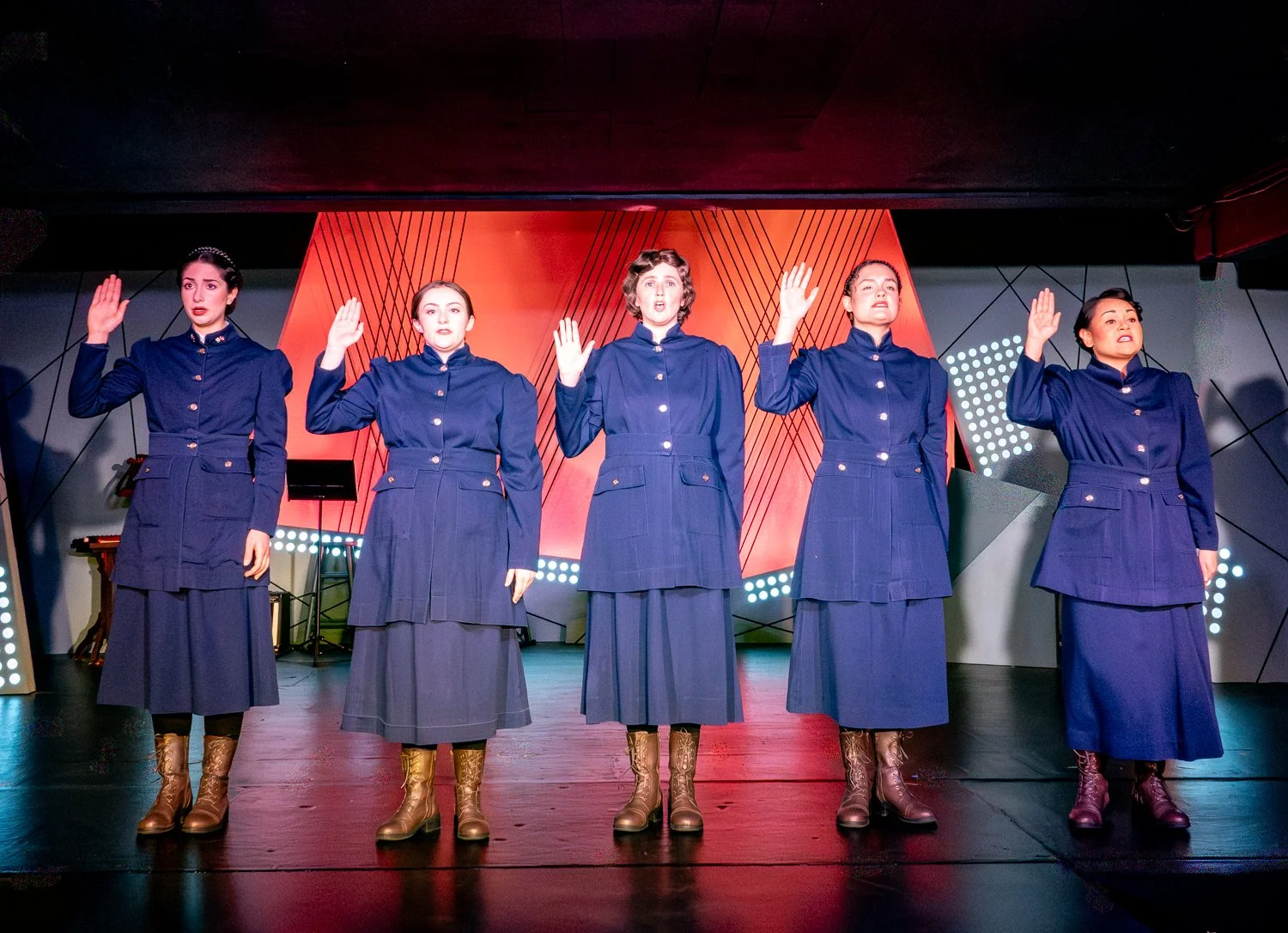
      Gianna DiGregorio Rivera, Naomi Latta, Hillary Fisher, and Yeena Sung. Photos by Kevin Berne
    Gianna DiGregorio Rivera, Naomi Latta, Hillary Fisher, and Yeena Sung. Photos by Kevin Berne

    Eisa Davis Spins Improv Musical Web in Process of Becoming

    by Aaron Draper

    “||:Girls:||:Chance:||:Music:||” follows four young women attending a summer music program, tracing their artistic and personal development as they navigate collaboration and the pressures of performance. While the play is framed as a story about the transformative power of arts education, it ultimately struggles to deliver a clear narrative focus.

    Playwright Eisa Davis cleverly uses the “repeat” symbols in the title to include musical notation front and center.

    Designer Nina Ball sets the stage for an evening of musical exploration. Ball has created a striking, unique setting with tall pillars at odd angles, as if the building might topple at any moment.

    Ball’s visually engaging set is inspired by sheet music and improvisation. The piano, drums, flute, and baritone saxophone clearly put us in a music education setting.

      Gianna DiGregorio Rivera, Naomi Latta Hillary Fisher, and Yeena Sung
    Gianna DiGregorio Rivera, Naomi Latta Hillary Fisher, and Yeena Sung

    The most compelling thread of the story emerges in the four girls’ evolving connection to improvisation. They journey toward letting go of rigid structure and embracing the chaos of creativity, offering resonant and authentic moments.

    The young women deliver strong musical performances throughout: Hillary Fisher, as the vocalist Fax, stands out for her classical vocal control and presence. Naomi Latta’s portrayal of Margot brings a sharp, rebellious energy—reminiscent of John from The Breakfast Club. Yeena Sung and Gianna DiGregorio Rivera round out the ensemble with equally committed performances.

    Collectively, the group demonstrates impressive musicianship, highlighted by their interplay during the improvisational segments.

    When the characters simply jam—abandoning written music and trusting their instincts—the play feels most alive. These scenes effectively capture the freedom and exhilaration that improvisation brings to artists.

      Naomi Latta and Gianna DiGregorio Rivera
    Naomi Latta and Gianna DiGregorio Rivera

    However, the play is burdened by an abundance of plots that dilute its impact. Storylines involving a shared sperm donor, homelessness, an unexpected explosion that injures a student, and episodes of drunken conflict compete for attention. While each of these ideas has potential, none are given enough time to develop fully, leaving the audience with fragments rather than a coherent journey. The result is a story that feels scattered, without a clear point of view.

    The production opens with an unconventional audience interaction: twelve volunteers are invited onstage to select notes from a twelve-tone scale, forming a musical sequence that the performers weave into the music of the show. While inventive, the device takes too much time to develop. The audience is left with a clunky melody that the performers must work around.

      Gianna DiGregorio Rivera, Yeena Sung, and Hillary Fisher
    Gianna DiGregorio Rivera, Yeena Sung, and Hillary Fisher

    Despite its strengths, the play falls short. The frequent monologues directed at the audience feel disconnected from the central action, interrupting rather than enhancing the narrative. Repeated lines such as, “If you feel discouraged, you should be,” hint at a theme, but remain to be explored to deepen our understanding.

    In the end, “||:Girls:||:Chance:||:Music:||” offers an abundance of ideas about youth, artistry, and music education, but lacks the cohesion needed to make those ideas land. While the performances and musical sequences are engaging, the play leaves us with information rather than an emotional connection—a collection of intriguing concepts that never quite coalesce into a satisfying whole.


    “||:Girls:||:Chance:||:Music:||” by Eisa Davis, directed by Pam McKinnon, scenic design by Nina Ball, costumes by Mel Ng, lighting by Russell H. Champa, sound by Fan Zhang, and original music by Eisa Davis.

    By American Conservatory Theater, in co-production with Vineyard Theatre. Playing at: STRAND THEATER, 1127 MARKET Street, SAN FRANCISCO 94103.

    Info: act-sf.org – to April 19, 2026.

    Cast: Gianna DiGregorio Rivera, Hillary Fisher, Naomi Latta, and Yeena Sung.

  • “Jesa”: Sisters’ Reunion Goes Inevitably Awry—at The Public

    “Jesa”: Sisters’ Reunion Goes Inevitably Awry—at The Public

      Laura Sohn, Christine Heesun Hwang, Shannon Tyo, Tina Chilip. Photos: Joan Marcus
    Laura Sohn, Christine Heesun Hwang, Shannon Tyo, Tina Chilip. Photos: Joan Marcus

    Jeena Yi Digs Deep into Korean Family Secrets & Finds Humor

    by Andrea Libresco ‍ ‍

    Beige is the dominant color of one sister’s Orange County home, and the setting for Jeena Yi’s play, but the goings-on will hardly be beige. Indeed, those kitchen knives lined up perfectly on their magnetic wall holder will get some use!

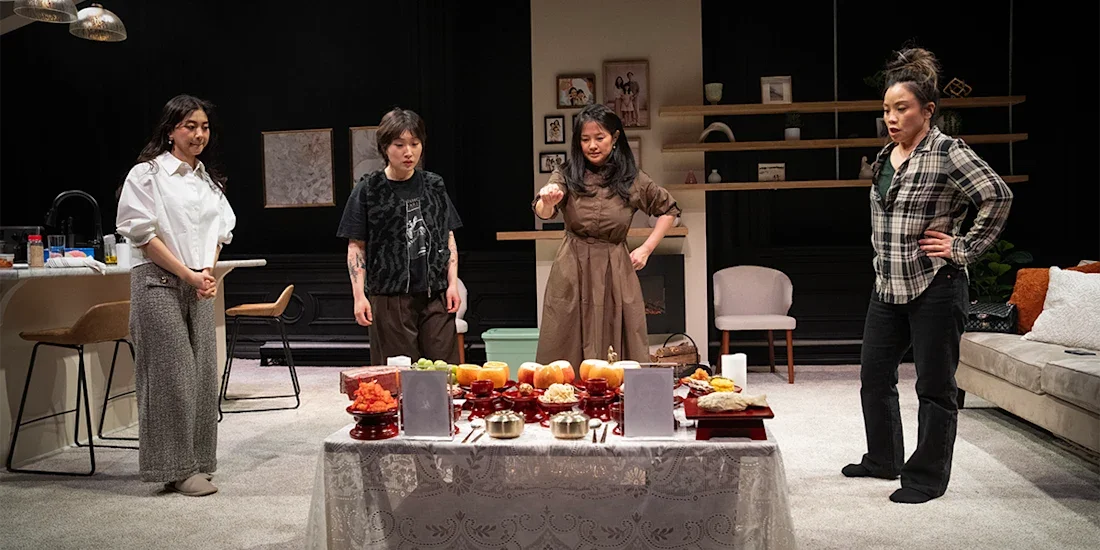
    Four Korean American sisters gather for Jesa, an annual Korean ceremony to honor their dead mother and father and ask for their blessings. As traditional food is arranged and consumed, old animosities surface, secrets are revealed, ghosts visit, and emotions are expressed—and expressed, and expressed.

    The sisters, like many siblings, do not appear to have much in common. Tina (Tina Chilip), the oldest, has a big laugh and a foul mouth. Grace (Shannon Tyo), second oldest, hosts them in her suburban home.

    The third sister, struggling theater director Brenda (genuine Christine Heesun Hwang), has avoided attending the ceremony for years. And youngest sister Liz (Laura Sohn) has enough money from her job in finance to set up a trust for Grace’s daughter.

    Playwright Jeena Yi encapsulates the sisters’ differences in small actions, like how they take off their shoes:  Grace, the “perfect” host, wears indoor sandals, while Tina kicks off her boots, sending them flying. Liz lines up her shoes just so; Brenda forgets to remove hers and, later, reveals no socks.

    But the sisters share a heavy burden: the trauma of being raised in a household marked by their Korean parents’ anger, which, we learn, included physical abuse.

    The Jesa ritual, centerpiece of the play, is beautifully realized with traditional food—grapes, chestnuts, shrimp, rice, oranges. They bow together, capturing the stillness and respect of the ancient ceremony.

    When none of the sisters can recall the precise order of the rite, Liz googles “Jesa,” but the sites are all in Korean, which they cannot read. Playwright Yi presents their second-generation immigrant struggle simultaneously as comedy.

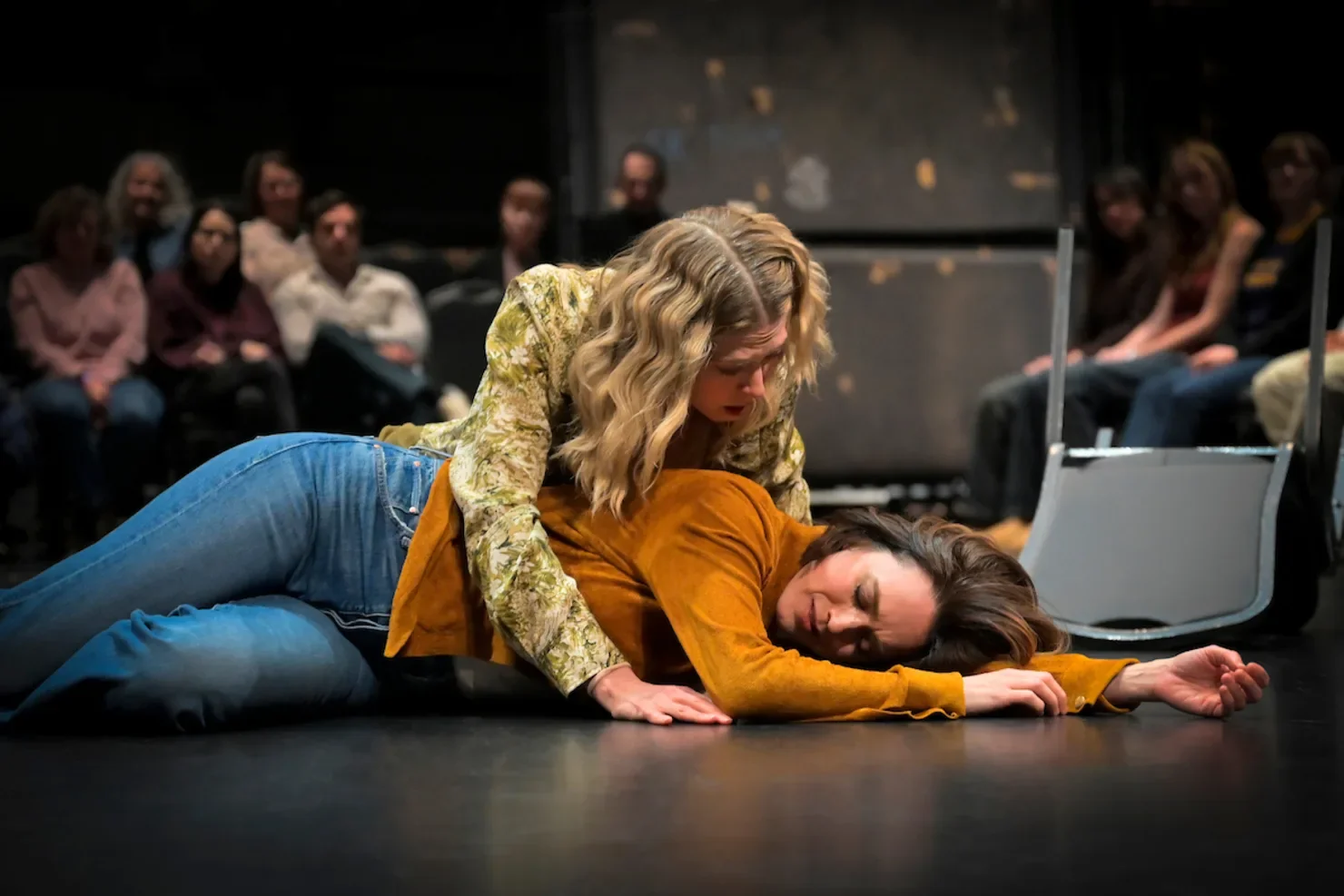
      The knife comes out
 Shannon Tyo, Tina Chilip
    The knife comes out
 Shannon Tyo, Tina Chilip

    Over the course of the evening, as a physical fight breaks out, the shrimp is burned, the tablecloth is pulled off the ceremonial altar, and the electric candles are knocked over. Humor arrives at just the right moment: “This is why we don’t have real candles.”

    All is recovered: sisters salvage the shrimp, the candles, and the altar. The ritual resumes, so that even the skeptical can acknowledge their parents’ spirits and transgressions. But the generational trauma remains. As she reflects on her own DUI and firing from her job, Liz speaks to her father’s photo, saying: “apple, tree.”

    This Jesa provokes powerful changes. At the end, we find ourselves hoping that, by naming their trauma and admitting their imperfections, the sisters can move forward. A younger sister finally calls her older sister “Unnie,” the Korean term of respect.

    One sister reassures another that her daughter will forgive her because she forgives their mother. Another asks the sister with the once-orderly beige house: “My far-from-perfect confused, loved sister, your whole life is waiting for you; what are you waiting for?”

    The sisters are free to plan their next, less haunted, Jesa 
 in Vegas.


    “Jesa” by Jeena Yi, directed by Mei Ann Teo, scenic design by You-Shin Chen, costumes by Mel Ng, lighting by Jeanette Oi-Suk Yew, andsound by Hao Bai, by Ma-Yi Theater Company, at The Public Theater, New York.‍ ‍

    Info: publictheater.org – to April 12, 2026.

    Cast: Tina ChilipChristine Heesun HwangLaura Sohn, and Shannon Tyo.